
Employee Engagement Survey Topics Every Bank and Credit Union Should Monitor
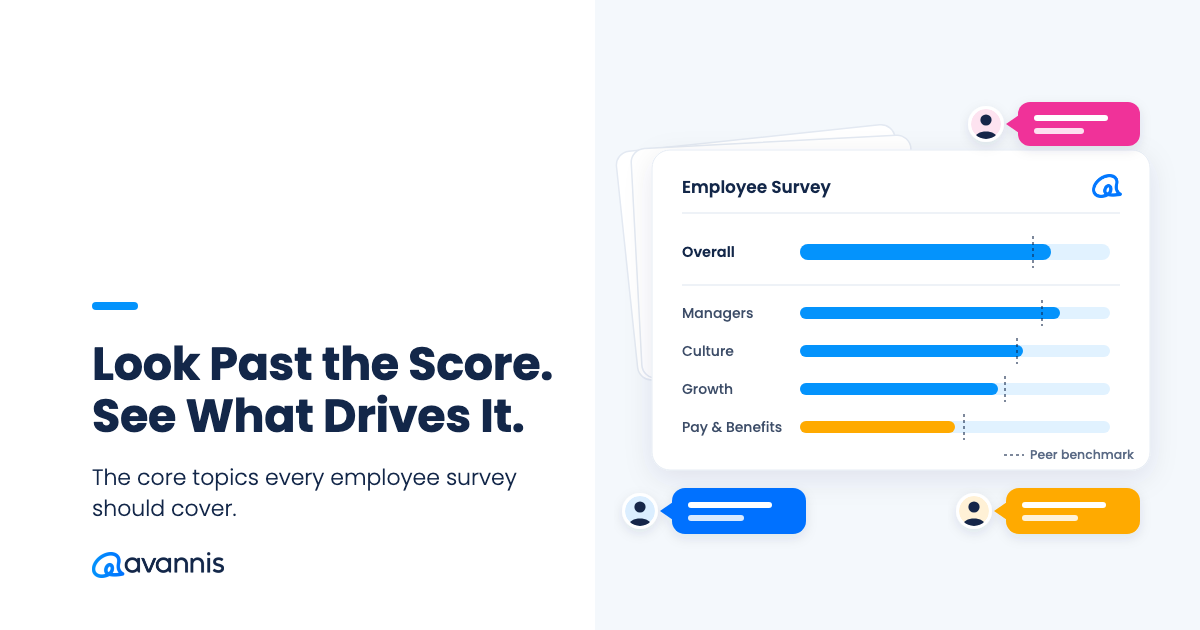
Most banks and credit unions recognize the value of listening to their employees, and many conduct employee satisfaction surveys to understand how their people feel. The harder part is what comes immediately afterward: getting results that tell leadership what to do next.
It’s possible to come away from an employee survey with a positive overall satisfaction score but little explanation behind it. That can happen when the questions are selected before leadership has clearly identified what it needs to understand. A stronger starting point is to define the areas of the employee experience the institution needs to monitor, then design the survey around the topics that will provide direction.
With that in mind, here are several core topics an employee engagement survey should cover.
Overall Employee Satisfaction
A survey or study should start with the broad picture: How do employees feel about working for the institution?
Overall satisfaction provides a useful benchmark, especially when an organization can track it over time. But an overall satisfaction score becomes more meaningful when leadership understands why employees feel the way they do. By monitoring satisfaction alongside other experiences, a survey can provide greater context around employee satisfaction and retention, including areas that might contribute to retention challenges.
Management, Working Relationships, and Resources
Employee satisfaction is closely connected to how employees feel about their managers and immediate working environment. But those experiences can differ widely from one team to another, and a bankwide score may smooth over those differences.
That’s why an employee engagement survey should look more closely at areas like:
- Relationships with managers and coworkers.
- Whether employees feel supported and valued.
- Whether expectations are clear.
- Whether employees have the tools and resources needed.
These topics all influence how an employee feels about their job, and will provide a clearer picture than a satisfaction score alone.
Culture, Respect, and Inclusion
An employee’s connection to the institution itself should be measured. Look at topics like:
- Whether they understand how their work contributes to the institution’s mission.
- Whether employees feel respected and included.
- How employees view executive leadership and organizational communication.
- Whether employees see opportunities to grow and develop.
- How employees feel about their work/life balance.
Looking more closely at these areas can help leadership understand how employees experience the broader organization beyond their individual job responsibilities.
Compensation and Benefits
At almost every institution, pay and benefits score lower than other employee experience topics. On its own, a low score can look concerning, but when compared with similar banks and credit unions, it may be fairly typical.
It may also point to a real gap.
That’s where financial institution benchmarks become especially useful. They help leadership put those results in perspective and understand whether what they’re seeing reflects a broader industry pattern or something more specific to their organization.
What Should an Employee Satisfaction Survey Actually Do?
A useful employee satisfaction survey measures core topics consistently, allows results to be tracked over time, and leaves room for institution-specific priorities and concerns.
Your organization may look into standardized studies, custom studies, or both. While we describe each in greater detail in this article, in short, a standardized study generally uses the same or similar questions, timing, and reporting structure across participating institutions, making comparisons and benchmarking easier. A custom study is built around the specific goals, priorities, and questions of an individual institution. Neither approach is automatically better. The right choice depends on what leadership is trying to learn.
We do gently advise against typing “best employee survey questions” into your search engine of choice and then calling it a day. Questions pulled from the web may give you a place to start, but they won’t necessarily provide the insight needed or show how your institution compares with similar organizations. The questions you ask should reflect what you’re actually trying to understand.
Turn Survey Results Into Employee Experience Management
Collecting responses to surveys is only the first step. Effective employee experience management means organizing the findings so leadership can identify patterns, compare results, monitor changes, and determine what action may be useful. An employee experience platform can help institutions do just that, as well as provide benchmarking and ongoing visibility.
Avannis has decades of experience helping financial institutions understand what their employees are experiencing and turn that feedback into practical direction. If you’re ready to build a clearer picture of your employee experience, get in touch today.